The difference between Alzheimer’s and dementia is one of scope. Dementia is the general term for cognitive or behavioral symptoms that interfere with work or daily activities, while Alzheimer’s disease is one specific brain disease that causes them.
If a parent has just been given one of these words, our guide on parent diagnosed with alzheimer’s what to do covers the practical steps that follow. This article explains how the terms relate, what happens in the brain, and why the exact type shapes care.
Dementia as the umbrella, Alzheimer’s as one cause
Dementia describes a pattern of symptoms rather than a single illness. Ohio State’s health system says the term is used when people have cognitive or behavioral symptoms that interfere with work or daily activities, and when delirium or a major psychiatric disorder does not explain them. WMCHealth calls it an umbrella term for a range of neurocognitive disorders, a syndrome that various underlying conditions can produce.

Alzheimer’s disease sits under that umbrella. According to the same Ohio State source, it is a specific brain disease and one of the most common causes of dementia in patients older than 65. So “dementia” answers the question of what is happening to a person’s thinking and function, and “Alzheimer’s” answers the question of why.
Alzheimer’s is the leading cause, but not the only one. BrightFocus puts it at 60 to 80% of all cases, while WMCHealth gives around 60-70%. The ranges differ by source, so treat them as showing that Alzheimer’s accounts for most dementia and that a meaningful remainder has other causes.
One point applies to every type. Ohio State stresses that dementia is not a “normal” part of aging. Memory loss or a decline from a person’s prior functioning warrants evaluation rather than waiting to see whether it passes.
What happens in the brain
The cause determines both the pattern of symptoms and the treatment questions, so it helps to look at mechanisms before comparing types.
Alzheimer’s disease
A review in PubMed Central describes Alzheimer’s as involving abnormal accumulation of amyloid-β protein as senile plaques and of tau protein, together with neuronal atrophy. The typical cognitive profile is prominent episodic memory impairment, with secondary deficits in word-finding, spatial cognition and executive functions. WMCHealth notes that early symptoms often include forgetfulness and trouble with word-finding.
The same review describes atypical, nonamnestic forms, where the primary deficits are in word-finding, spatial cognition or executive functions instead of memory. A parent whose first problems are not forgetfulness may therefore still have Alzheimer’s, and a doctor should not rule it out on that basis alone.
Vascular dementia
Vascular dementia has a different mechanism. BrightFocus explains that cardiovascular changes lead to reduced blood flow, and therefore reduced energy supply, to the brain. The problem lies in the brain’s circulation rather than in the protein build-up that defines Alzheimer’s.
Types of dementia compared
BrightFocus names Alzheimer’s disease and vascular dementia as the two most common types. It lists dementia with Lewy bodies, frontotemporal dementia, mixed dementia and young-onset dementia among the other types. The table sets out what is established for each major type and how to use it when talking with a clinician.
| Type | What is known | Planning use |
|---|---|---|
| Alzheimer’s disease | Amyloid-β plaques, tau and neuronal atrophy; memory impairment typical, with word-finding, spatial and executive difficulties alongside | Ask whether the picture fits the typical memory-led pattern or an atypical form |
| Vascular dementia | Cardiovascular changes reduce blood flow and energy supply to the brain | Ask what the evaluation showed about blood flow and whether another type is also present |
| Lewy body dementia | Listed among the other major types; Lewy bodies are also a pathology that can accompany Alzheimer’s at autopsy | If this type is raised, ask which findings point toward it and whether it overlaps with Alzheimer’s |
| Frontotemporal dementia | Listed among the other major types alongside Lewy body and mixed dementia | Ask the evaluating clinician what distinguishes it from Alzheimer’s in your parent’s case |
| Mixed dementia | More than one pathology affects the brain; Alzheimer’s and vascular dementia often occur together | Expect care planning to account for more than one cause |
The table draws on BrightFocus for the type list and vascular mechanism, and on the PubMed Central review for Alzheimer’s pathology and overlap with other pathologies.
Young-onset dementia appears in the BrightFocus list as a category in its own right. Whichever label a family hears, the first question is the same: which underlying condition is causing the symptoms.
Alzheimer’s versus vascular dementia
These two are the most frequent pairing in family conversations because they are the two most common types. They differ mainly in cause, and that difference is the practical way to tell them apart.
Different drivers
Alzheimer’s is driven by protein accumulation and neuronal atrophy, and its typical early signs are memory lapses and word-finding trouble. Vascular dementia is driven by reduced blood flow to the brain. A vascular diagnosis therefore points to a circulation problem, whereas an Alzheimer’s diagnosis points to the protein changes described above.
When both are present
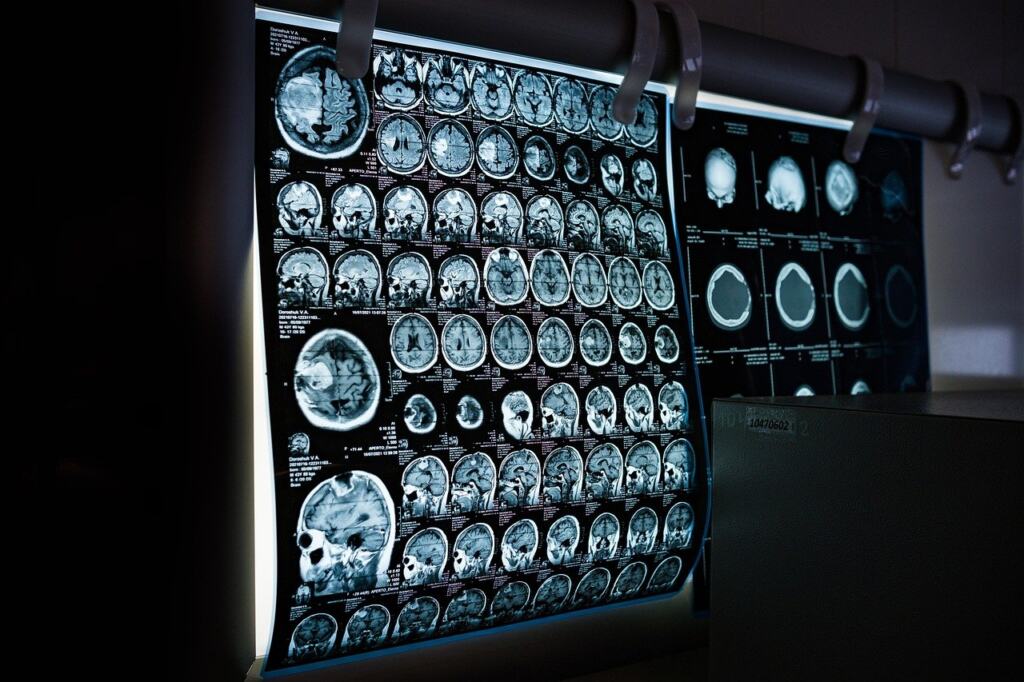
The two do not exclude each other. BrightFocus says Alzheimer’s and vascular dementia often occur together. WMCHealth describes mixed dementia as more than one pathology affecting the brain, and the PubMed Central review reports that Alzheimer’s often co-occurs at autopsy with cerebrovascular disease or Lewy bodies.
So yes, a person can have more than one type. If a doctor names one cause, it is reasonable to ask whether another may also be contributing, because that affects how the whole picture is managed.
From symptoms to a named type
A general dementia label is usually a starting point, not an endpoint. Families can move toward a specific answer in a sensible order.
- Request an evaluation early. Memory loss or decline from prior functioning warrants assessment, as Ohio State notes, rather than being put down to age.
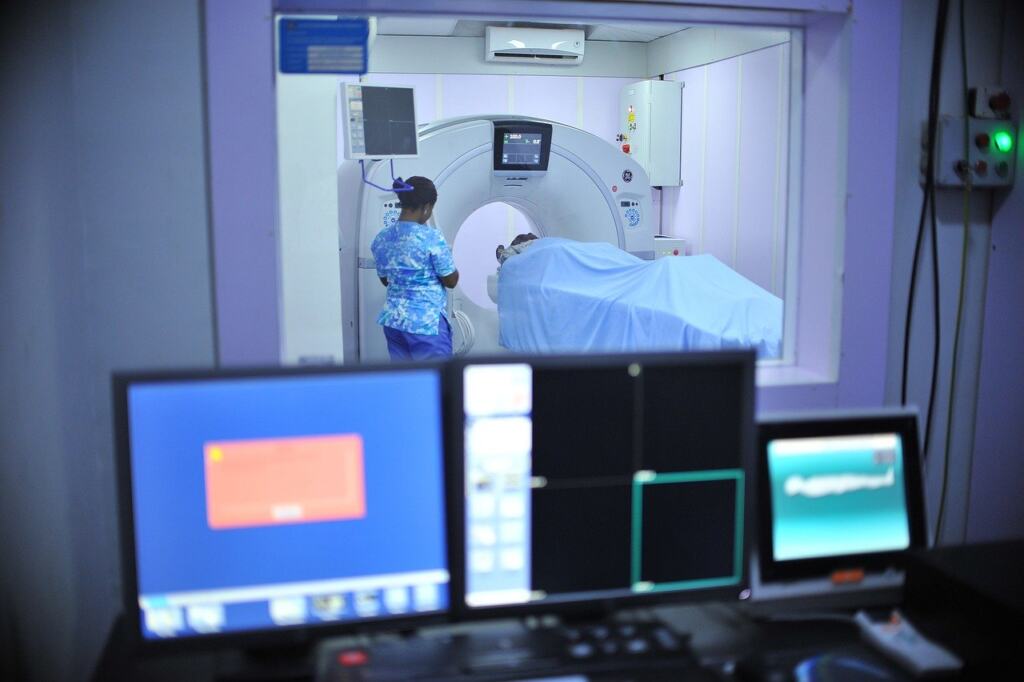
- Ask about the laboratory work-up. BrightFocus describes laboratory analysis, including brain imaging and blood tests, used to detect Alzheimer’s biomarkers.
- Ask whether more than one cause is involved. Because mixed dementia is recognized, a single named type may not be the full explanation.
- Ask whether any contributing cause is treatable. Some forms of dementia may be caused by reversible medical issues, so the evaluation should look for them.
The process of testing and diagnosis is covered in more depth in our guide on how is alzheimer’s diagnosed.
Why the type matters for care and treatment
Not all dementia is Alzheimer’s, and Baptist Health points out that some forms may be caused by reversible medical issues. That alone is a reason to avoid settling on a vague label. A reversible cause is only found if someone looks for it.
The PubMed Central review adds that correctly diagnosing dementia type is increasingly important as disease-modifying agents emerge. A treatment aimed at one underlying disease is of little use if the cause is different, or if a second cause is also present.
For families, the type also shapes what to expect. Alzheimer’s follows a recognized course, described in our overview of the stages of alzheimer’s disease. Where mixed dementia is present, planning has to allow for more than one cause at work.
Two practical judgements follow. If your parent has only the word “dementia” in their record, ask the clinician whether further evaluation is warranted. If a type has been named, ask whether the evaluation looked for other contributing conditions.

Frequently asked questions
Is dementia a normal part of aging?
No. Ohio State’s health system states that dementia is not a “normal” part of aging, and that memory loss or decline from prior functioning warrants evaluation.
How many Americans have Alzheimer’s disease?
BrightFocus says Alzheimer’s affects nearly 7 million Americans aged 65 and older. An older figure from the Alzheimer’s Association’s 2017 Facts and Figures, cited by Baptist Health, estimated 5.3 million and projected about 16 million by 2050. Estimates change between reports, so use the most recent edition for planning.
Do current treatments stop Alzheimer’s?
According to BrightFocus, current treatments do not stop the progression of Alzheimer’s disease. This is one reason an accurate diagnosis and an honest conversation about goals of care matter.