For art therapy for the elderly, the best fit is a credentialed art therapist when the goal is emotional support or communication, and a relaxed class or hobby when the goal is enjoyment and company. Most older adults can benefit from one or the other.
This guide sits within our wider coverage of caring for aging parents. The activities below are an ordered selection, not a ranking. No single medium is best for everyone, so choose by your parent’s abilities, interests and the purpose of the activity.
How to choose an activity
Four questions narrow the field quickly. Answer them before buying supplies or booking a class.
- Hand function: Match the activity to what the hands can do comfortably today. Painting, collage and clay ask for different grips and different amounts of fine control.
- Communication: If words are hard to find, favour media where the making does the talking, such as painting, clay or music.
- Company: A group class suits a parent who is isolated. A solo project at the kitchen table suits one who tires in crowds.
- Purpose: Pick a hobby for pleasure and routine. Pick art therapy when there is grief, anxiety, withdrawal or a diagnosis that makes ordinary conversation difficult.
Creative activities to try
A care provider’s overview of art activities for older adults lists painting and drawing, sculpting and clay modeling, collage and textile arts. Each is described below with who it suits and where it falls short.

Painting and drawing
Painting and drawing are the most flexible options. They need little equipment, work at a table or a lap desk, and can be done alone or beside others. They suit someone who enjoys open-ended, low-pressure making. The limit is control: a parent with a tremor or weak grip may find fine brushwork frustrating, so let them choose whatever tool and paper size their hand can manage comfortably.
Clay and sculpting
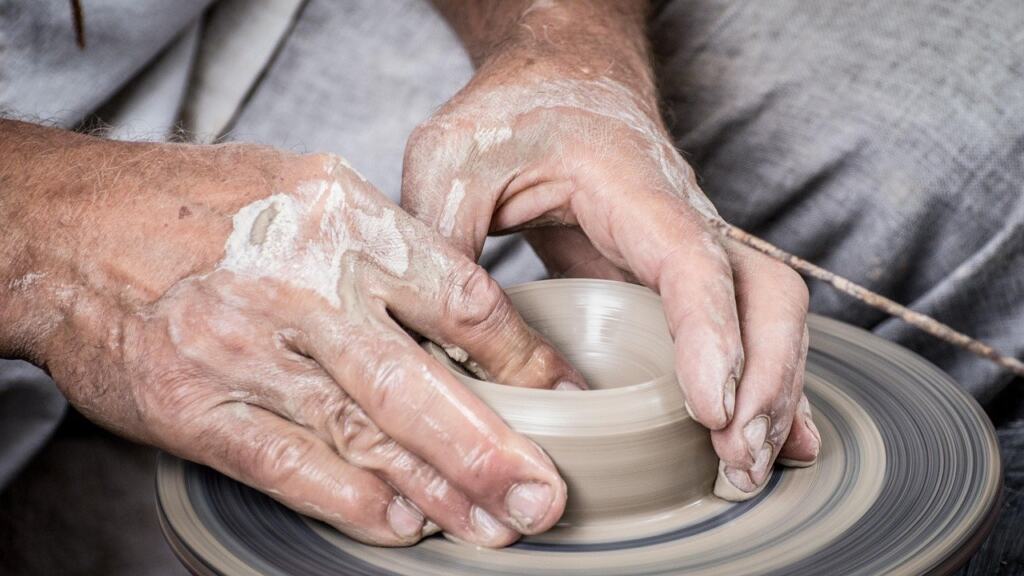
Clay is tactile, so it relies on touch rather than on drawing skill or on finding words. That makes it a good candidate when a parent is reluctant to “draw” but happy to handle something. It is also messier and needs a wipeable surface and an apron. Anyone with painful or stiff hands should stop and rest when the work becomes a strain rather than a pleasure.
Collage
Collage lets a person build a picture from cut or torn images, so no drawing ability is needed. It suits someone who wants a finished result without having to produce marks from scratch, and old photographs and magazines can prompt conversation. Scissors and glue still demand some hand control, so tearing paper is a gentler alternative.
Textile arts and knitting
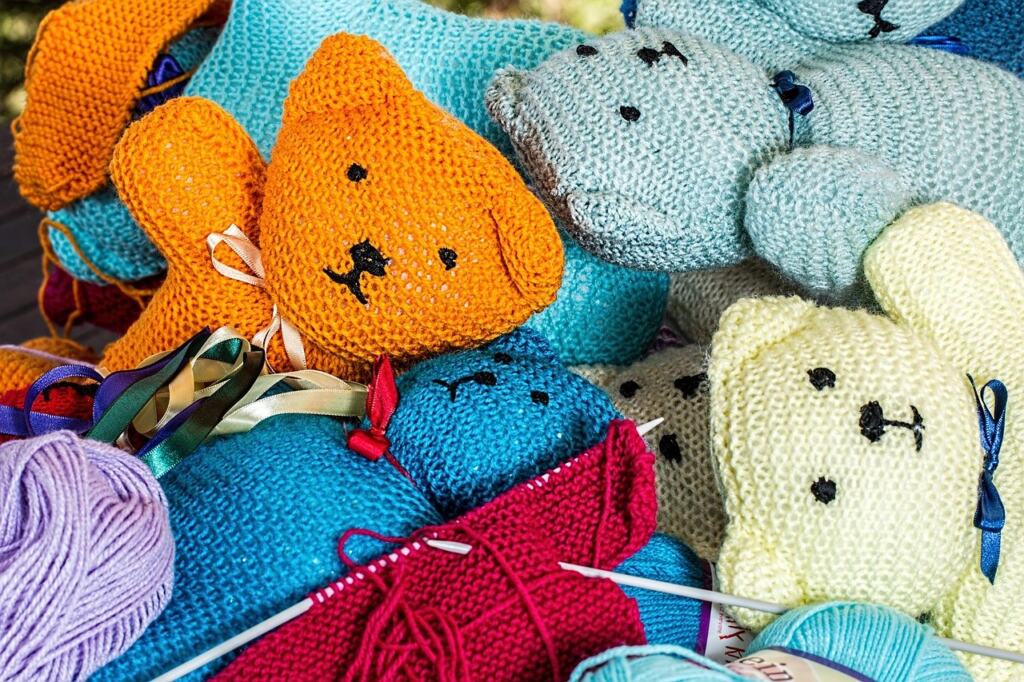
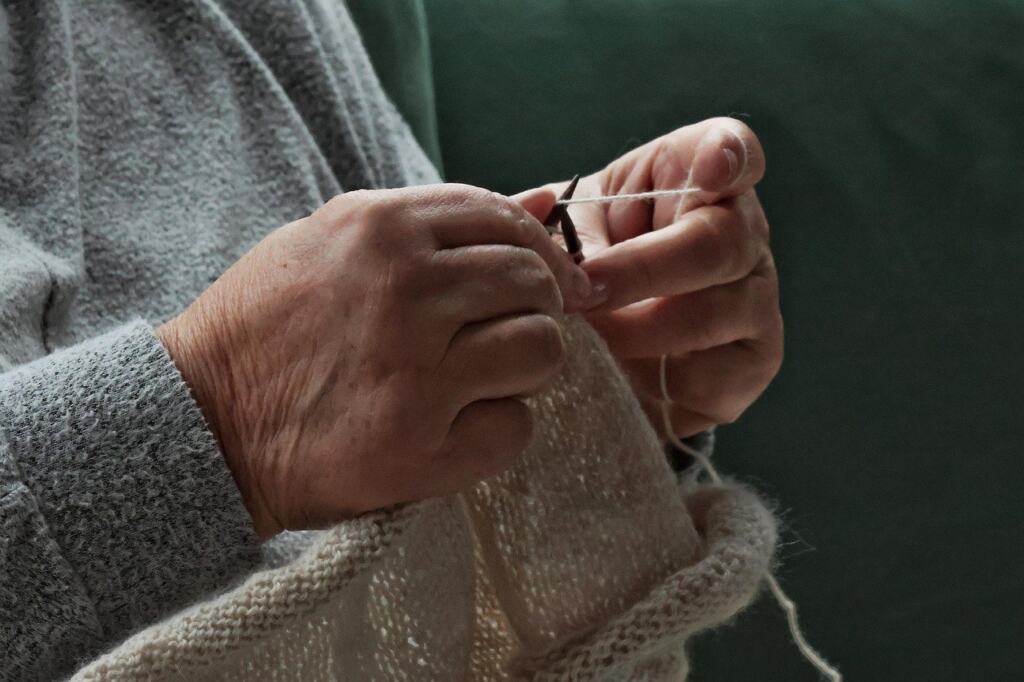
Knitting, sewing and other textile arts are seated, rhythmic handcrafts. They suit parents who already have these skills and want to keep using them. They are less suited to anyone with significant joint pain or poor vision, and a parent who is starting from scratch may find the learning curve discouraging.
Comparing the activities side by side
| Activity | Best suited to | Main limitation | Planning use |
|---|---|---|---|
| Painting and drawing | Open-ended expression, solo or group | Fine control with tremor or weak grip | Start here if unsure; scale tools and paper to the hand |
| Clay and sculpting | Touch-led making; low reliance on words | Mess; strain on stiff or painful hands | Choose when drawing feels intimidating |
| Collage | Producing a finished piece without drawing | Scissors and glue need some dexterity | Good for reminiscence with photographs |
| Textile arts | Parents with existing skills | Joint pain, vision, learning from scratch | Keep an established craft going |
| Music, writing, dance, play acting | Emotional benefit without art supplies | May need a group, teacher or space | Use when visual art does not appeal |
The activity list comes from a care provider’s art therapy overview, and the note on other creative pursuits from the American Psychiatric Association.
How art therapy differs from arts and crafts
The American Art Therapy Association defines art therapy as an integrative mental health and human services profession. A craft class aims at a finished object. Art therapy uses the making itself for emotional and psychological ends, and a trained professional guides it.
What a therapist does that a class leader does not
Art therapists observe and analyse art-making behaviours, art products and verbal associations to understand a client. Depending on the client’s needs, the therapist may direct the process or the client may work spontaneously. Once the piece is made, therapist and client explore together the feelings that arise. A hobby class normally stops at the finished piece.
Credentials to look for
Art therapists are master-level clinicians who work with people of all ages in many settings. In Canada, professional art therapists must hold at minimum a master’s diploma or degree, and the Canadian association’s training standards include a practicum of at least 600 hours for students. A friendly activity coordinator may run excellent creative sessions, but a title like “art therapist” should come with this kind of training. Ask about it directly.
Benefits of art therapy for seniors
The evidence is encouraging but uneven, and it comes from different groups. Some is specific to older adults, and some is not, so treat it as support for trying creative activity rather than a guarantee of results.
Connection and communication
The American Art Therapy Association says people with dementia still have a great need to communicate with others. It describes the artist William Utermohlen, who found that expressing his sadness through art was a way of staying connected with the outside world. In a 2020 survey reported by the same association, art therapists described art therapy as particularly effective during times of crisis, especially in coping with isolation. That is a professional judgement rather than a trial result, but it fits the way social engagement protects older people from withdrawal.
A care provider’s summary adds that studies show art therapy for seniors with dementia can improve cognitive function, reduce agitation and enhance communication. It also lists better socialisation and self-esteem as possible gains. The summary gives no study figures, so use it as a reason to ask about creative arts for dementia, not as a promise.
Evidence from other groups
As summarised by the American Psychiatric Association, a six-month study of caregivers of people with long-term illness found that regular creative arts activity reduced stress, decreased anxiety and increased positive emotions. In a separate study of cancer patients, four hour-long guided drawing sessions improved psychological well-being. Neither study was limited to older adults, so they point to what creative work can do rather than prove it for seniors. They are also a prompt for the person doing the caring: if you are stretched thin yourself, review the caregiver burnout signs and consider a creative outlet of your own.
Finding an art therapist or a senior art class
Start with the professional directories if you want therapy, and with local venues if you want a class.
- Therapist in the United States: The American Art Therapy Association offers an Art Therapist Locator, and the credentialing board’s directory is a second place to check, as described by the American Psychiatric Association.
- Therapist in Canada: The Canadian Art Therapy Association keeps an online Art Therapist Directory of professional and registered members.
- Where therapists work: They see individuals, couples, families or groups, in settings that include elder care and health and rehabilitation institutions, so ask a care home or day programme whether sessions are offered.
- Classes: Senior centers are a practical first call for hobby classes and group programmes. Ask what is on the calendar, whether the instructor has experience with limited mobility, and whether a trial session is possible.
Whichever route you take, say plainly what your parent can and cannot do, and what you hope the sessions will provide.
Hobbies that keep a parent active and engaged
Visual art is not the only route. The American Psychiatric Association notes that music, writing, dance and play acting have also demonstrated emotional and mental health benefits. If painting leaves your parent cold, try singing groups, journaling or a drama circle instead.
- Build on past interests: A former seamstress may return to textiles more readily than she would take up clay.
- Favour company: Group sessions give regular social engagement, which a solitary hobby cannot.
- Keep it short and repeatable: A regular slot beats an ambitious project that tires everyone out.
- Adjust, don’t drop: If mobility or dexterity declines, change the tool, the seating or the medium before abandoning the activity.
Frequently asked questions
Does my parent need artistic talent?
No. Art therapy is not about the final product; it is about healing through the process of making art. The same attitude helps at home: praise the effort, not the result.
Is art therapy only for people with dementia or serious illness?
No. Art therapists work with people of all ages, individually or in groups, in health, rehabilitation and care settings. A parent does not need a dementia diagnosis to be referred.
Can someone who struggles with words still take part?
Yes. Art therapy gives people an opportunity to express feelings without reliance on words, and a care provider notes it benefits those with language difficulties.